
Honey & Roleplay AI Chatbot
FOYA DevLifestyle
4.6856.00 Reviews
- Version
- 4.0.6
- Installs
- 100.00K
- Age Rating
- Mature 17+
Screenshots





Our Review of Honey & Roleplay AI Chatbot
 Analysis by Appyee
Honey & Roleplay is the kind of lifestyle app I would open when I want a conversation that feels more imaginative than ordinary messaging. Developed by FOYA Dev, it focuses on AI roleplay chats, letting me explore fictional personalities and conversational situations rather than simply asking for practical answers. The experience is aimed at adults, and that matters because the mature rating sets a different expectation from a general-purpose assistant.
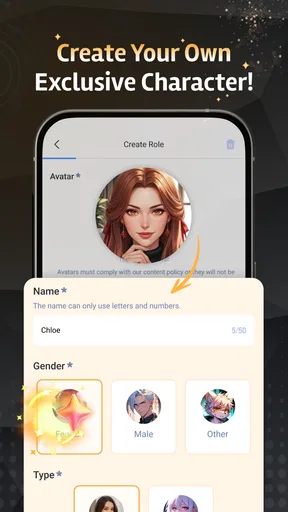
My first impression is that its appeal depends less on a long feature list and more on how willing I am to guide a conversation. The app gives me a space for character-driven exchanges, but the quality of those exchanges comes from the prompts, boundaries, and tone I establish. That makes it more personal than a standard chatbot, while also making it less predictable. I can enjoy that freedom, but I cannot expect every interaction to feel equally coherent.
How the chat feels when the connection is doing the work
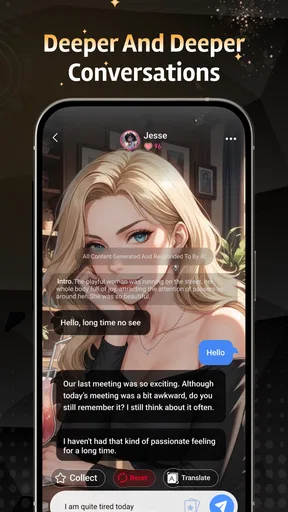
The central experience is network-dependent in a very practical sense: I need a working connection for the remote AI conversation to respond. When the network is stable, the rhythm is simple. I send a message, wait for the generated reply, and decide whether to continue the scene, change direction, or start a different kind of exchange. That waiting time becomes part of the experience, especially when I am trying to maintain a dramatic or emotional tone.
This is different from reading a downloaded story or playing a conventional offline game. The next line is generated in response to what I write, so a weak connection can interrupt the mood at exactly the wrong moment. A delayed reply is not just a technical annoyance; it can make a character feel less convincing and force me to reconstruct the scene in my head. I found that the app works best when I treat it as an interactive conversation rather than a fixed piece of entertainment.
For that reason, I would use it on reliable home Wi-Fi or a strong mobile signal when I want a longer session. A brief exchange during a commute can still work, but I would not choose it for a place where reception repeatedly drops. The app’s value comes from continuity, and continuity is the first thing a shaky connection damages.
A useful habit is to write prompts that give the conversation something concrete to hold on to. Instead of sending a vague line such as “continue,” I get better results by mentioning the setting, the mood, and what I want the character to do next. This reduces the feeling that I am waiting for the app to invent everything by itself. It also makes recovery easier when a reply takes the conversation in an unexpected direction.
There is a trade-off here that is easy to miss. The open-ended nature of AI roleplay can feel more alive than selecting dialogue from a menu, but it also means I have to contribute more. Someone looking for a polished story with carefully authored scenes may prefer interactive fiction or a visual novel. Someone who enjoys shaping the direction personally will probably find the flexible chat format more rewarding.
What I would do with it on a phone
Honey & Roleplay fits short mobile sessions because I can pick up a conversation and continue it with only a few messages. I can imagine using it while taking a quiet break, winding down before bed, or looking for a creative prompt when I do not want to open a full game. The phone format suits this kind of private, text-led interaction better than a large, complicated interface would.
At the same time, mobile use creates distractions that are less noticeable on a desktop. Notifications, incoming messages, battery concerns, and changing signal strength can all break the mood. I would avoid starting an involved roleplay scene when I know I will be interrupted repeatedly. The app is more enjoyable when I can give the exchange a little attention instead of treating it as something to fill every spare second.
A realistic everyday scenario would be a long train ride with intermittent reception. I might begin a conversation while the signal is strong, then reach a section where replies become slow or fail to appear promptly. In that situation, I would first stop sending repeated messages, because doing so can make the conversation harder to follow once responses arrive. I would note the last clear point in the scene, wait for the connection to settle, and then send one concise message that restates the immediate context.
That approach is more useful than repeatedly tapping the send button. It protects the flow and avoids creating several overlapping requests. I also prefer keeping my prompts compact on a phone. Long paragraphs are possible, but they are harder to edit on a small screen, and a short instruction with a clear emotional direction often gives me enough control.
The app runs on Android devices using version 7.0 or later, which makes it accessible to people using older supported phones as well as newer models. Still, operating-system compatibility does not guarantee the same comfort on every handset. Screen size, keyboard quality, memory, and connection behavior can affect how pleasant a long chat feels. I would pay attention to those everyday factors before deciding whether it belongs in my regular routine.
Because this is a mature-rated app, I would also be deliberate about where I use it. A private setting is more appropriate than a shared screen or a crowded public place, particularly if the conversation moves into adult themes. The age rating is not a minor label here; it tells me that the app is not intended for children and should be treated accordingly on a family device.
When a reply fails or the scene loses its thread
Connectivity problems are not the only form of failure. AI roleplay can also lose track of tone, forget a detail, or respond in a way that feels out of character. I would not treat every awkward reply as a network issue. Sometimes the connection is fine and the generated response simply misses the direction I intended.
My preferred recovery method is to correct the scene without overexplaining. I might write, “Keep the same setting, but make the response calmer and remember that the character already agreed to leave.” That gives the conversation a clear anchor. Sending an angry or highly emotional correction usually adds noise rather than improving the next reply.
If the app stops responding, I would check the basics first: whether other apps can reach the internet, whether I accidentally sent multiple messages, and whether reopening the conversation restores normal behavior. I would avoid assuming that reinstalling is the first answer, especially if I care about preserving the current context. A simple pause and a fresh, concise message is often the least disruptive recovery step.
Another practical technique is to maintain a small “scene note” outside the chat for longer roleplays. I can record the names, setting, relationship, and the last important decision in a notes app. This is not a built-in Honey & Roleplay feature; it is a workflow I use to compensate for the natural fragility of long AI conversations. If the exchange becomes confusing after a delay or an unexpected reply, that note gives me a clean way to re-establish the premise.
This also reveals one of the app’s limitations. It is easy to become invested in a conversation, but I should not assume that the AI will preserve every detail perfectly across an extended session. The more complicated the scene becomes, the more helpful it is for me to restate essential facts. That extra effort may feel unnecessary at first, yet it gives me more control than waiting for the app to remember everything automatically.
I would also be cautious about treating the chatbot as a substitute for a real person during a serious personal crisis. Roleplay can be comforting or creatively useful, but it does not provide human judgment, professional care, or genuine mutual understanding. That distinction is especially important when a conversation feels emotionally intense.
Using it thoughtfully on mobile data
Since the experience relies on online exchanges, I would include it in my data-conscious habits. I would prefer Wi-Fi for longer sessions and use mobile data for shorter conversations when I know the signal is dependable. The exact amount of data used can vary with the way the app communicates, so I would watch my phone’s data settings rather than assume every session has the same cost.
I would also avoid treating private roleplay as automatically private simply because it happens on my phone. I would not type passwords, payment details, identifying information, or sensitive details about another person into an AI conversation. This is sensible behavior for any online chat service, but the intimate tone of roleplay can make people disclose more than they intended.
There is a financial side to consider as well. The app is free to install and use as a starting point, but it offers in-app purchases ranging from $1.99 to $49.99 per item. I would check what a purchase changes before committing, especially if I am only curious about the format. Setting a spending limit in the app store is a good idea for anyone who might make several small purchases during frequent chats.
The current version is 4.0.6, and I would keep the app updated through the normal store process when possible. Updates can matter more for a network-connected app than for a static offline utility because server communication and compatibility can affect the experience. I would still avoid updating immediately before an important planned session if my connection is unreliable or my phone has limited storage.
One of my more useful habits would be separating experimentation from personal material. I can test different roleplay styles with fictional names and simple scenarios first. Once I understand how the conversations behave, I can decide whether the app suits more personal creative use. This gives me a clearer sense of its strengths without exposing information I would regret sharing.
Who gets the most from the experience
I think Honey & Roleplay is best for adults who enjoy improvisation, character conversations, and open-ended creative play. It can be a good companion for someone who wants to explore dialogue ideas, rehearse a fictional situation, or simply have an imaginative exchange without coordinating with another person. The strongest use cases are the ones where I am happy to steer the conversation and accept a little unpredictability.
It may also appeal to writers who want a quick way to test how a character could react to a situation. I would not use every generated reply as polished writing, but an unexpected answer can reveal a conflict, motivation, or scene direction worth developing elsewhere. The app works better as a brainstorming partner than as a replacement for editing or deliberate story construction.
On the other hand, I would skip it if I want a fully scripted narrative, dependable factual answers, or a tool designed around productivity. A normal assistant is more suitable for schedules, research, and practical tasks. A traditional game is better when I want clear rules, visual progression, and a predictable sense of achievement. A messaging app is the right choice when the important thing is genuine human connection rather than simulated character interaction.
The mature rating also makes it unsuitable for children and inappropriate for anyone expecting an all-ages environment. I would not install it on a shared family phone without considering who might open it. Adults who are uncomfortable with adult-oriented themes should choose a different kind of conversational app instead of hoping the roleplay format will always remain neutral.
My overall view after weighing the trade-offs
Honey & Roleplay has a clear identity: it is a lifestyle app built around AI roleplay chats, not a general chatbot pretending to be a game. That focus is its main strength. When I have a stable connection, a specific idea, and enough time to guide the exchange, it can feel surprisingly engaging. The 4.6 average from around 9.9 thousand ratings and more than 100 thousand installs suggest that the format has found a real audience, while the free entry point makes it easy to try.
Those figures do not remove the practical compromises. The experience depends on connectivity, the AI can lose consistency, and longer scenes require more active management from me. In-app purchases also mean I would pay attention before spending, rather than assuming every useful part is included without cost. The app is most satisfying when I accept it as an improvisational tool instead of demanding the reliability of a finished story.
My final recommendation is fairly specific. If you are an adult who likes imaginative conversations and does not mind correcting the direction occasionally, I think it is worth trying on a stable connection. Start with a simple fictional scenario, set the tone clearly, and keep sensitive personal information out of the chat. If your priority is offline access, human conversation, structured gameplay, or practical assistance, I would choose another category instead.
For me, the deciding factor is connectivity combined with participation. A strong signal keeps the exchange moving, but my prompts determine whether the conversation becomes interesting. Used with that understanding, Honey & Roleplay can be a flexible little space for creative and character-focused chats. It is not a replacement for people, stories, or professional support, but it can be enjoyable when I want an adult-oriented roleplay experience that responds to the direction I bring.
Verdict
Strengths of Honey & Roleplay AI Chatbot
- Offers creative roleplay scenarios for casual entertainment.
- Multiple character personalities make conversations feel varied.
- Useful for brainstorming stories, dialogue, and fictional situations.
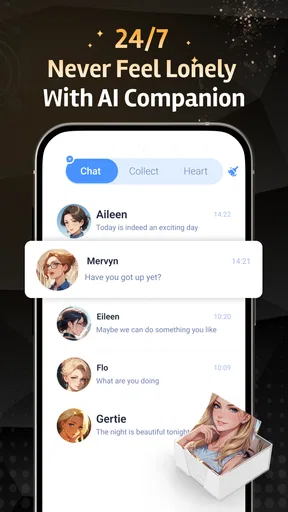
- Chat history helps users continue ongoing roleplay sessions.
- Simple interface makes starting a conversation quick and easy.
Limitations of Honey & Roleplay AI Chatbot
- AI responses may occasionally feel repetitive or inconsistent.
- Some characters or features may require a paid subscription.
- Conversations can include unexpected or unsuitable generated content.
- Requires an internet connection for most chatbot interactions.
- Privacy policies should be checked before sharing personal information.
Similar Picks in This Category
View All
SmartThings
Samsung Electronics Co., Ltd.4.6

Google Home
Google LLC4.0

Pinterest4.2

Astrotalk - Talk to Astrologer
Astrology & Horoscope4.7

My Verizon
Verizon Consumer Group4.5

Samsung Wallet (Samsung Pay)
Samsung Electronics Co., Ltd.4.1
Frequently Asked Questions
What is Honey & Roleplay AI Chatbot, and what can I use it for?
Honey & Roleplay AI Chatbot is an entertainment-focused conversational app that lets you interact with AI characters in fictional scenarios. You can start casual conversations, create romantic or dramatic roleplay situations, and explore different personalities depending on the available character options. The experience is designed for storytelling and companionship rather than factual research, so responses should be treated as generated fiction and may vary in quality or consistency.
Is Honey & Roleplay AI Chatbot free to download and use?
The app may be available to download at no initial cost, but some features can require in-app purchases, a subscription, credits, or other premium access. Limits may apply to messages, character choices, response speed, or advanced customization for free users. Before starting a trial or payment, check the current store listing and the app’s own pricing screen carefully, including renewal terms and cancellation instructions.
Is Honey & Roleplay AI Chatbot suitable for children and teenagers?
Parents should review the app’s official age rating and privacy information before allowing younger users to install it. Roleplay chatbot services can include mature themes, romantic conversations, suggestive language, or user-generated scenarios, depending on the characters and prompts available. Age filters are not always perfect, so the app is best used by the audience specified in its store listing, with parental supervision where appropriate.
Does Honey & Roleplay AI Chatbot protect my conversations and personal information?
You should avoid sharing passwords, payment details, precise location, private photographs, or other sensitive information in any AI chat. Conversations may be processed by the app provider or its technology partners to deliver responses, maintain the service, prevent abuse, or improve performance. Read the current privacy policy to understand data collection, retention, account deletion, and whether chats may be reviewed or used for service development.
Does the AI remember previous conversations and respond accurately?
The chatbot may use conversation history or memory features to make roleplay feel more continuous, but its memory is not guaranteed to be complete or permanent. It can forget details, contradict earlier messages, misunderstand prompts, or produce repetitive and unexpected replies. Treat the AI as a fictional conversation partner rather than a reliable expert, and restart or clarify the scenario whenever the character loses context.
